



Climate & Energy
The Iran war a double-edged sword for the energy transition
Asia's oil shock should accelerate the clean energy transition, but energy security concerns are pulling governments back toward coal.

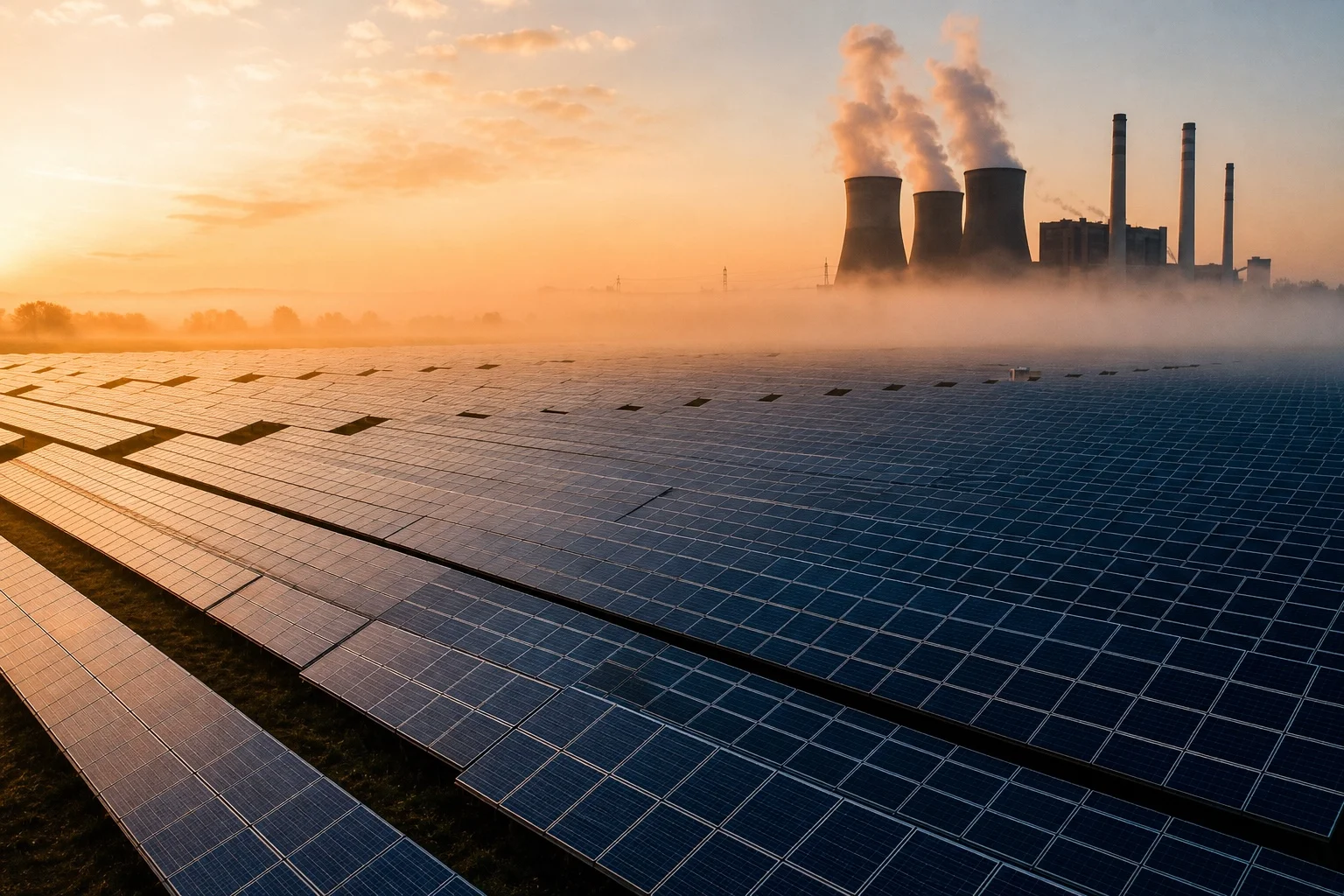
The ongoing conflict in the Middle East and the ensuing volatility in the global energy market has brought Asia’s energy transition into the spotlight. Highly-dependent on fossil fuel imports, the closure of the Strait of Hormuz—a critical gateway between oil producers in the Gulf and economies across the Asia-Pacific—has rattled the region’s energy security.
The fears are understandable. For much of the period between February and May 2026, Brent has been consistently over US$100 a barrel since the outbreak of the war in Iran. LNG cargoes that used to clear the Strait of Hormuz are either being rerouted or simply undelivered. Oil prices have since eased off—to the point of even retreating to pre-war prices of US$70 a barrel in early July—but the resumption of intensified attacks and the US blockade of Iranian ports is already raising price tags.
In response to shortages, cash-strapped countries like Thailand and the Philippines have rationed fuel, cancelled school days and encouraged widespread work-from-home policies. In Pakistan and Bangladesh, where governments have limited fuel reserves, rolling blackouts are becoming a part of daily life. Prime Minister Modi has urged Indians to cut fuel use, avoid foreign travel and pause gold purchases to ease pressure on the country’s foreign exchange reserves.
All of this brings into question the region’s energy transition aspirations. The question is not whether the region’s economies need to accelerate their energy transition, but whether it can do so while keeping its lights on and factories running. The reality is that both are happening in tandem: renewables are being scaled faster than before, but coal is also back into the mix to plug the gap.
For Asia’s banking sector, the challenge is going to be how it funds both, given the stigma associated with fossil fuels.
“The worry is that once a coal plant is brought back online, sunk costs and the political economy of energy pricing will make it hard to shut down again.”
New momentum for solar and wind
The economics of clean power were moving in the right direction prior to the Iran war. The conflict has only widened the price gaps. Given increased crude oil prices and uncertainty around LNG delivery, the marginal cost of fossil generation has climbed.
Aside from being better for the environment and critical to limiting the impacts of the climate crisis, building infrastructure for generating, storing and distributing clean power could strengthen countries’ energy security while also enabling them to circumvent volatile oil prices. Asia’s dependence on imported energy has resulted in significant fiscal strain: the higher fuel prices climb, the more countries are forced to pay for continued supplies, even as their currencies weaken against the US dollar. Higher energy prices also create both fiscal and monetary pressures, impacting a country’s growth outlook.
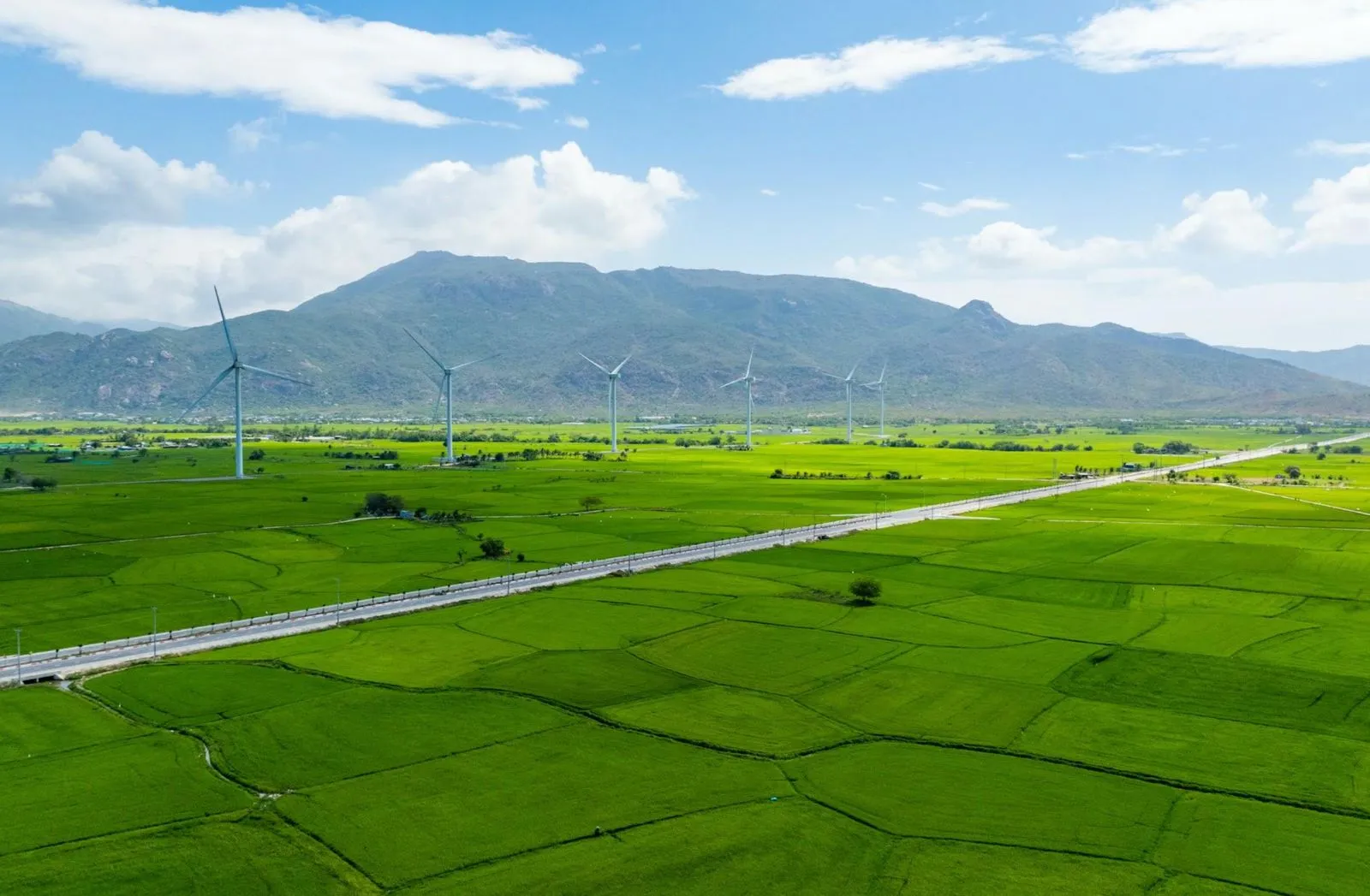
As technologies improve and demand grows, the cost of clean power generation has dropped sharply. According to the Institute for Energy Economics and Financial Analysis (IEEFA), at current prices, gas’ levelised cost of electricity (LOE) is three to four times higher than that of solar and wind. Global demand for Chinese renewables technologies has jumped since the oil supply shock began, with shipments of lithium-ion batteries and clean energy vehicles seeing notable increases. In Thailand, solar panel adoption has soared as consumers look for relief from soaring oil prices. Across the region, it is clear to governments that the sooner the transition is made, the better. But the path ahead is rocky.
Old habits die hard
Coal remains a major part of Asia’s electricity mix, not just because of the Iran war but also due to the power-hungry data centre sector. Cheap and readily accessible coal has enabled Asia to slow-roll its green energy transition, especially when considered alongside the size of the necessary investments.
Exhibit 1: Asia-Pacific relies more heavily on coal for electricity than the rest of the world
Electricity generation by fuel type, share of TWh (2024)
Electricity generation by fuel type, share of TWh (2024)
Source for both charts: 2025 Energy Institute Statistical Review of World Energy
*Data not available for Singapore
According to IMF estimates, emerging economies in Asia Pacific face an annual US$800 billion climate finance gap. The US’ non-commitment to climate issues and the administration’s denialism has not helped matters. Realising that political pressure has eased (some might argue that there is in fact more pressure to pull back from commitments) many companies have scaled back their climate commitments, due to shifting market and political dynamics.
And now, as oil prices have surged with the attack on Iran, many of the region’s countries have been forced to look back at coal to meet their energy needs, at least for the short term. Thailand has restarted two coal plants it decommissioned only last year; South Korea has removed the 80% operating cap on its coal-fired generators, and Japan has lifted restrictions on older, less-efficient plants for up to one year.
A similar story is playing out across the region. The Philippines has declared a national energy emergency and is boosting coal power; and Indonesia, meanwhile, is prioritising domestic coal consumption over exports, therefore tightening supply for its neighbours. The worry is that once a coal plant is brought back online, sunk costs and the political economy of energy pricing will make it hard to shut down again.
Now, these developments present Asia’s banks with a quandary they have spent the last decade trying to design their way out of: to stay away from coal in pursuit of the energy transition, or to meet their populations’ daily requirements in the here and now. This dilemma will no doubt impact decision-making at the region’s key financial institutions such as DBS, OCBC, UOB, Maybank and CIMB among them, that have made public commitments to phase out coal financing and set out pathways aligned with net-zero targets.
In an environment of high energy prices, banks’ industrial clients are seeking bridging finance to switch to coal. It is not entirely realistic for banks to walk away from this demand, particularly as governments themselves are reluctantly making similar choices. On the flip side, however, continuing to lend as before threatens to undo years of carefully built climate frameworks.
This is where transition finance becomes particularly important. Lending with explicit phase-out conditions, sunset clauses tied to grid decarbonisation milestones, and capital structures that pair short-term fossil bridging with longer-dated renewable commitments from the same borrower, could provide the middle path forward.
Annual climate finance gap
Annual climate finance gap faced by emerging economies in Asia Pacific (IMF estimates)
AUM behind green transition
Collective AUM of 282 institutional investors urging G7/G20 to stay committed to the green transition
Unlocking Asia’s green transition with green finance
Transition finance will be vital to ensuring the region’s emerging economies are able to make the shift to cleaner (and more secure) energy sources, and there is growing acknowledgement of this fact. In the aftermath of the US’ withdrawal from the Paris Agreement, 282 institutional investors and financial institutions with a collective AUM of US$17 trillion issued a letter urging G7 and G20 heads of state to stay committed to the green transition.
In fact, while political leaders’ appetites may have soured on their climate commitments somewhat, the financial sector still largely remains supportive of the sustainability agenda. Central banks and monetary authorities in Asia Pacific are continuing to embed sustainability into their core mandates and evolving regulations require banks and insurers to incorporate climate-related risk considerations into their lending and financing activities.
The Monetary Authority of Singapore (MAS), for one, has introduced specific guidelines for transition planning in order to help banks map out their own roadmaps to a low-carbon future. China’s central bank, meanwhile, has introduced innovative financing instruments to encourage more funding flows into green projects. As of 2024, these instruments helped deployment of CNY1.4 trillion (US$205 billion) of capital towards green projects across China.
Where sustainability meets statecraft
Across emerging Asia (and indeed, much of the world), the policy debate around these topics is no longer a sustainability discussion; rather, it is one that sits at the intersection of the environment, technology, the financial markets, public finance, domestic political factors and geopolitics. As Asian societies continue to grapple with the manifold dilemmas around energy security and the environment, private financing and institutional support are critical in driving positive change.
Multilateral banks have shown they can facilitate innovative financing through blended models that combine not just private and public financing, but also philanthropic funds. Blended finance will be particularly important in supporting green projects that might not otherwise meet the risk criteria of institutional and private investors. Consider, for instance, how the Asian Development Bank’s involvement in low-emission infrastructure projects opened the door for private capital flows into ASEAN.
Asia’s financial institutions are an important piece of the green transition jigsaw. This is a moment where they have a choice to make—do they take the easy way out and pull back from commitments made, or do they play a pivotal role in pushing for a sustainable energy transition? The next couple of years should provide an answer.