

Insight Hub · 2026
In the eye of the storm
A StoneBench research programme on how geopolitical fragmentation is reshaping finance across Asia-Pacific. The post-Cold War settlement—open markets, integrated supply chains, a dollar-anchored order—is being chipped away. The war in Iran is the focal point of much of this change, but the shift is structural. This programme examines what that means for how banks price risk, settle trade and allocate capital—and why Southeast Asia could gain.

Key Findings
Five structural shifts reshaping financial strategy
- 01
Geopolitics is now an integral part of balance sheets
The risks that once sat in quarterly country-risk reviews now impact oil prices, freight rates, borrower quality and broader economic growth.
- 02
Local-currency settlement is accelerating
Iran's demand for oil payment in yuan is part of a broader trend. Non-dollar invoicing and parallel rails—such as CIPS and bilateral frameworks—are reshaping hedging costs and liquidity planning.
- 03
Capital is migrating to neutrality
Multinationals and wealth are leaving traditional strongholds to explore new territories, with Gulf family-offices electing to move east to Singapore and Hong Kong. In 2024, ASEAN drew US$226 billion in FDI despite global flows falling 11%.
- 04
Climate risk meets credit decisions
Asian banks are shifting from pledge-led ESG to embedding climate risk in lending, pricing and transition finance, even as high oil prices pull the region back toward coal.
- 05
Southeast Asia is the structural beneficiary
Southeast Asia's neutrality could become a competitive advantage. Coupled with favourable demographics and its economies' participation in multiple trade corridors, the region stands to benefit.
US$58bn
Hong Kong's cross-border claims on the GCC
The largest Asian lender to the Gulf, with the most concentrated exposure (Q3 2025)
400 → 2,000
Singapore's UHNWI community
Up fivefold in under five years, as wealth migrates to safe havens
US$2.7trn
Central bank holdings of US treasuries
The lowest since 2012; gold now exceeds them for the first time since 1996

Research Programme
Three structural shifts
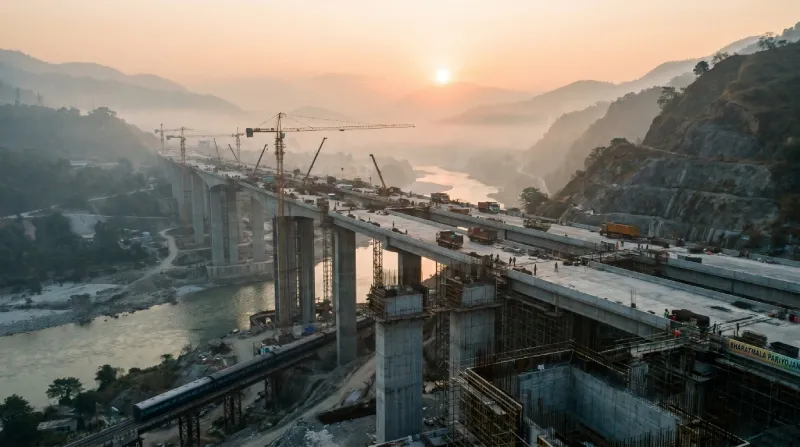
RESILIENCE & RISK
How Asia’s financial sector is building resilience in the backdrop of volatility
Besides rattling energy markets, the war in Iran has accelerated a shift in global finance towards Asia, forcing the region's banks to adapt fast.
Read article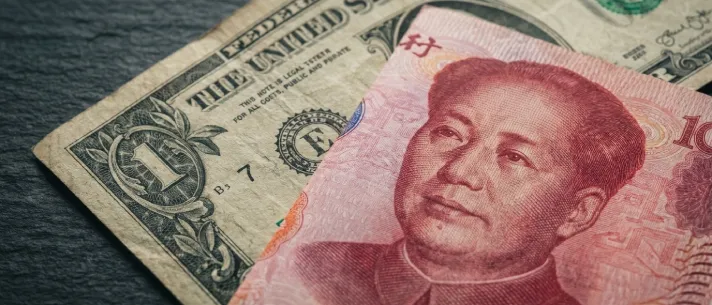
CURRENCY & SETTLEMENT
Beyond the greenback: How geopolitics is denting the dollar’s monopoly
The petrodollar system is not going away, but the Iran war has accelerated the search for alternatives.
Read article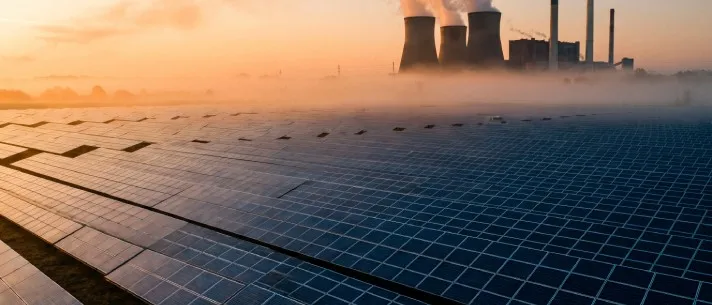
CLIMATE & ENERGY
The Iran war a double-edged sword for the energy transition
High oil prices should make renewables more competitive. But they are also pulling Asia back toward coal, leaving banks to fund both at once.
Read article
Whitepaper
In the eye of the storm: The full report
The global financial system was built on predictability: the assumption that risk could be modelled, priced and distributed within a stable, dollar-anchored order. The assumption doesn't hold any longer. Trade tensions, technology decoupling and sanctions regimes have resulted in volatility becoming a permanent feature.
This whitepaper traces that shift through recent geopolitical developments, most significantly, the war in Iran. It looks at impacts across shipping and insurance, capital and corporate reallocation, wealth migration, attempts to move away from the dollar and the energy transition.
US$2.4trn
Capital flows affected
Estimated capital flows subject to supply-chain restructuring across ASEAN by 2028
68%
Banks integrating ESG
Of major Asian banks now embedding climate risk directly into credit decision frameworks
What's inside
- 01Introduction
- 02The repricing
- 03The flight to stability
- 04The great wealth migration
- 05Dollar under pressure
- 06Could this be climate capital's moment?
- 07Conclusion
STONEBENCH PERSPECTIVES · Q2 2026