
How are Asian businesses responding to economic uncertainty?
Close to three months have passed since US President Trump’s Liberation Day tariffs. Since then, we’ve seen a series of changes to tariff rates on products from different countries and different sectors. It has been a period defined by uncertainty; and while a few Asian economies have managed to strike deals of some sort with Trump, these aren’t set in stone. Besides, manufacturers in most other Asian economies don’t know yet what rates will apply on their exports to the US after August 1.
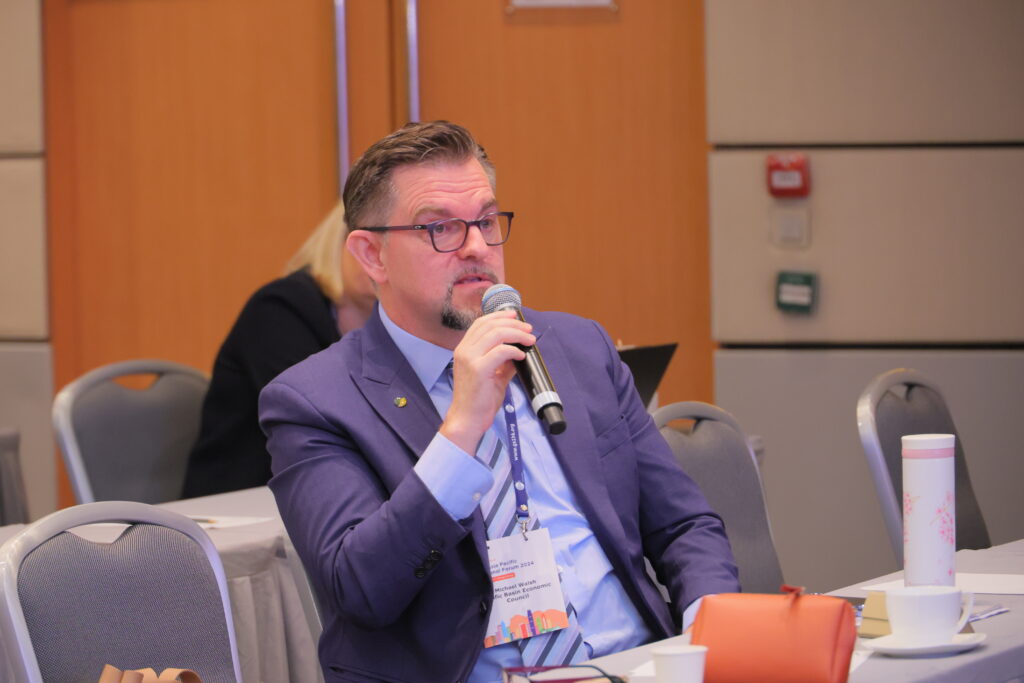
Michael Walsh, in his capacity as executive director of the Pacific Basin Economic Council, works closely with companies across Asia, as they navigate the uncertain economic environment. In this interview, he speaks with StoneBench about the biggest concerns companies are faced with, and steps they’ve been taking to circumvent the constraints they face.
Siddharth Poddar: With the frequent changes to US’ tariffs in the past few months, how has sentiment among Asian businesses changed? Is there less fear now with uncertainty the new normal?
Michael Walsh: Initially, the size of the tariffs—over 125% in China’s case—came as quite a shock. However, as China stood firm, it caught President Trump’s approach a bit off guard, leading to bond market volatility and a halt in the escalation. While the methodology of how these tariffs have been implemented has raised several questions, it’s important to note that many Southeast Asian countries have benefited from minimal tariffs on exports to the US for decades, while maintaining high tariffs on certain US imports, especially in the luxury, auto & food sectors. This situation, although unconventional, signifies a necessary rebalancing that was bound to occur. I don’t believe these tariffs will dismantle global trade; rather, they will prompt significant supply chain adjustments, and business leaders are having to adapt accordingly.
Poddar: What are you seeing companies prioritise in Asia from a strategic perspective or operational perspective? Are we seeing more companies trying to focus on domestic markets?
Walsh: Asian companies have consistently demonstrated their ability to adapt swiftly. The China Plus One strategy, for instance, gained traction even before the COVID-19 pandemic, with Vietnam emerging as one of the leading beneficiaries alongside other ASEAN and Latin economies. However, this doesn’t mean foreign companies are abandoning China altogether; rather, they are diversifying their capacities, adding resiliency and certainty into their supply chains.
In Vietnam, the competitive landscape has however shifted over the last few years where 2022 and 2023 were tough years. 2024 & 2025 is witnessing a recovery in the corporate sector: however, it’s no longer just larger companies that dominate, but faster incumbent companies can outpace slower competitors, largely due to technological advancements. Many public listed and family-owned firms face significant challenges in their technological transformation journey. Often, the long-term strategic direction is overly influenced by conservative generational owners and their key shareholders, which can lead to a lack of clarity and purpose for its younger people.
Such key challenges include forecasting and long-term planning, which means that firms face difficulty in creating effective long-term strategies. Mindset and capabilities are another problem which includes embracing technology, like AI, that requires fostering the right mindset among personnel and board members. Firms also often face challenges in effective decision-making and implementation. Risk management is another challenge where it is difficult to navigate risks associated with transformation with effective oversight. Adapting new processes and standards is a challenge where it is becomes difficult aligning internal practices to match with benchmarks established by SAP and UNESCO regarding ethical & inclusive AI.
Companies must assess whether they have the right people, processes and technology to drive innovation and achieve their own strategic goals.
Poddar: In your interactions with companies, outside of tariffs and supply chains, what are some other issues keeping Asian business executives up at night?
Walsh: It’s crucial to understand that the challenges extend beyond trade; demographics play a significant role as well. Many Asian economies in the region lack social safety nets similar to those in mature European economies, creating societal risks. Countries like South Korea, Japan and China face rapidly ageing populations, compounded by the ongoing technological transformation. The pressing questions are: Can their workforces adapt? Will individuals be able to upskill, or will we see a drop-off in participation that burdens local society? The demographics of the region pose multiple challenges for governments and businesses alike.
Additionally, there is a pressing need for sustainable governance at the board level, integrating ESG principles and digital transformation into their core strategies. The biggest hurdle remains people, particularly in fostering green behaviours and managing emissions. Upskilling across all levels of the company is vital, yet changing mindsets among management and workers proves particularly challenging especially in the manufacturing sector.
Several business leaders feel ill-equipped and overwhelmed at times to navigate these rapid changes. Another pressing concern is the sustainability of their own business models. Questions about long-term viability and relevance are at the forefront of their strategic thinking.
Poddar: How are the economic uncertainty and geopolitical considerations impacting investment?
Walsh: Investment impacts can vary significantly by sector. For instance, the defence and private health sectors and their supply chains have seen a notable increase in global investment. Many countries are boosting their defence spending as a percentage of GDP, marking a fundamental shift in production and the ancillary industries tied to it, from research and development to the broader supply chain.
Moreover, financial centres and stock exchanges are increasingly collaborating on policy alignment and reporting standards. Additionally, UK, Canada, Australia and EU investment trends are on the rise and are increasingly directed towards Southeast Asia.
In conclusion, I feel many Asian businesses are at a crossroads, grappling with various challenges from tariffs, a competitive landscape, demand issues, demographic shifts and technological advancements. However, there are still significant opportunities for growth in the ASEAN region in the areas of digital transformation, sustainable practices, infrastructure development, regional free trade agreements, and tourism and hospitality.
As companies prioritise transformation, they must seek to cultivate a governance culture that encourages innovation and agility at all levels, address the digital divide, and include different generations of exposure and experience within organisations and societies to ensure they have the right people and processes to drive sustainable growth. The ability to adapt and evolve in this rapidly changing landscape will determine a company’s success in the future.
As business leaders navigate these opportunities, I advise investors to remain vigilant regarding the issues of corruption and patronage that are still prevalent in the region. Building lasting relationships based on transparency and ethical practices is crucial. Please conduct thorough due diligence and engage with local experts to understand the regulatory environment better. By doing so, investors will mitigate their risks and enhance the chance for sustainable success in ASEAN.
About the interviewee
Michael Walsh is the Executive Director of the Pacific Basin Economic Council, where he leads initiatives to advocate for sustainable economic growth and collaboration across the Asia-Pacific region. With his experience in international trade and policy development, Walsh is committed to fostering partnerships that enhance regional prosperity. He holds a degree in Economics & Masters in Finance and has worked with various governmental and non-governmental organizations, driving impactful projects that address key economic challenges. His leadership emphasizes innovation, inclusivity, and strategic vision for the future of Asia Pacific.